

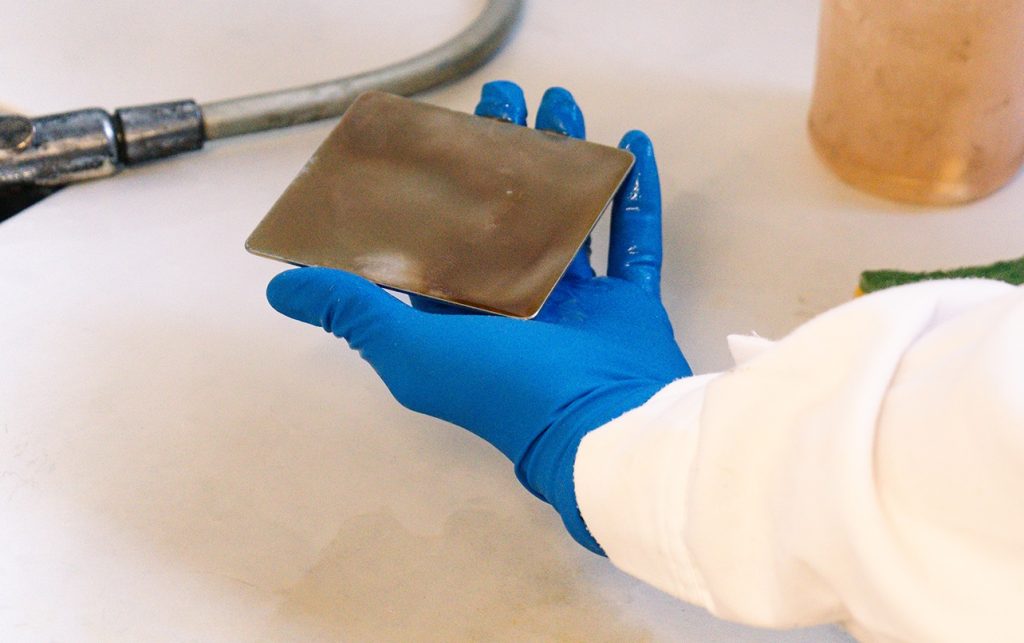
In Lamberti Design’s manufacturing processes, metal is transformed through techniques that combine technical expertise, aesthetic research, and experimentation. Every surface is the result of a precise process, carefully designed to enhance the material and guide it toward the desired outcome. Colors, textures, and finishes thus become an integral part of the project, helping to define the character of architectural elements, furnishings, and decorative structures.
Within the company’s workshop, each process follows a methodical and controlled procedure. The first stage is metal degreasing, which is essential for removing impurities and properly preparing the surface for subsequent treatments. After careful drying, necessary to ensure consistency and stability in the final result, the metal undergoes chemical surface transformation processes.
Through controlled acid etching and specific treatments, the metal acquires new shades, tones, and textures, developing finishes with a strong material character. In this way, the natural process of oxidation is guided and accelerated, making it possible to achieve sophisticated surfaces that are fully aligned with the desired aesthetic project.
The Lamberti Design Laboratory: Innovation and Experimentation
Research into finishes finds its core in the Lamberti Design chemical laboratory, a specialized facility dedicated to metal surface treatments and equipped with advanced technologies for experimentation and the development of new processes. Here, technical expertise, design sensitivity, and creativity work together to create bespoke finishes for the worlds of architecture, interior design, and contract furnishing.
The laboratory represents a meeting point between design and production: chemists, technicians, and designers work jointly together to develop surfaces capable of meeting both aesthetic and functional requirements. Every treatment is carefully studied to ensure quality, resistance, and long-term durability while preserving the material’s aesthetic value.
The wide variety of textures, color effects, and processing techniques available makes it possible to create tailor-made solutions for residential, commercial, and industrial environments, transforming metal into a distinctive element capable of interacting with light, space, and different materials.