

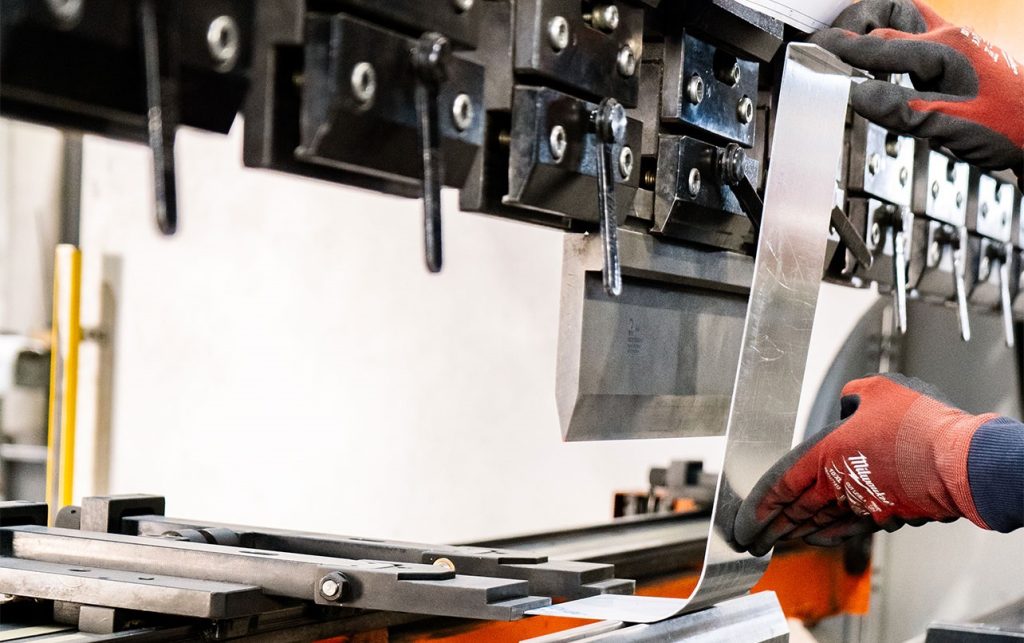
Metal bending is a process that allows sheet metal and metal profiles to be shaped through precise and controlled folds. At Lamberti Design, this technique is not simply a production step, but a fundamental element in defining the shapes, geometries, and aesthetic details of the final project. It is used to create furniture, cladding, architectural elements, and decorative structures, ensuring precision, formal continuity, and high construction quality. Metal is therefore able to combine strength and elegance, adapting to customized projects in both residential and contract environments.
Technology, Expertise, and Special Processes
At Lamberti Design, metal bending is the result of the integration of advanced technology, technical expertise, and design sensitivity. The technical department and workshop work in constant synergy, sharing material data, bend deduction parameters, and all the information required to ensure precision and repeatability in the final result. Thanks to the use of machine-board software and the expertise of the designers, the number of tests and trial runs is minimized, optimizing both timing and production processes. Alongside traditional bending techniques, the company also develops specific processes designed to meet particular aesthetic and functional requirements. Among these, flattening bends eliminate sharp edges, transforming the material profile into a softer and safer line. For more sophisticated geometries, pleated bending replaces traditional rolling processes, making it possible to achieve striking curves and dynamic surfaces with a strong visual impact.
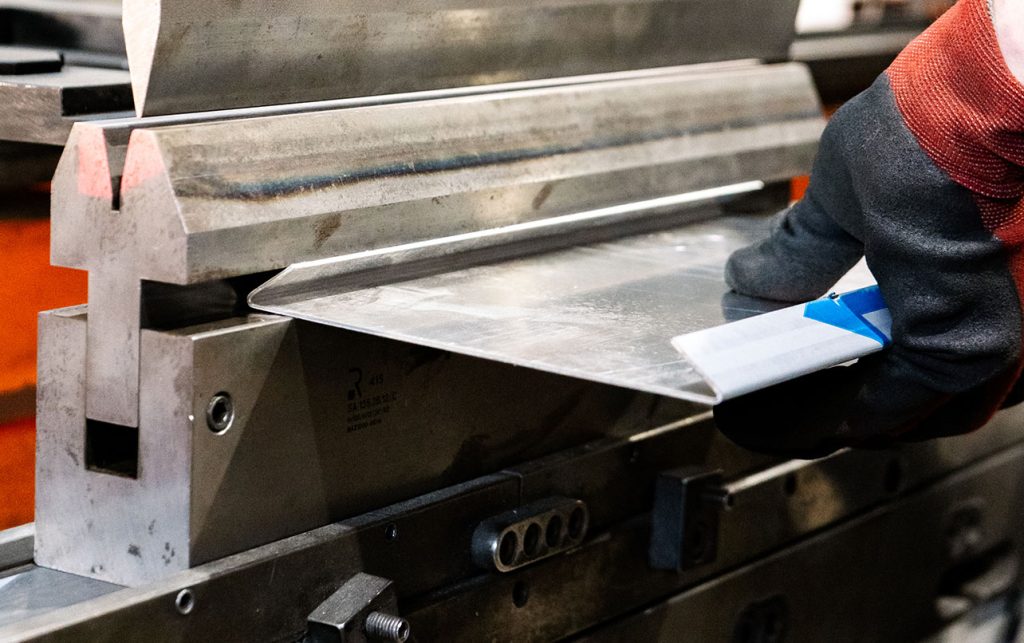
Metal Bending in Custom Projects
The precision of metal bending makes it possible to create custom-made elements that integrate perfectly with the space and with the other materials used in the project. From decorative structures to metal cladding, every process is designed to achieve the right balance between functionality, aesthetics, and construction quality. Bending is therefore not just a technical detail, but an integral part of the design language, enhancing metal through clean lines, precise geometries, and carefully crafted finishes.